Tater’s Takes – Half Price Halloween Candy

November 6th, 2010 by Potato

It was not a good week for the diet, as my love of candy and deals conspired with the arrival of half-price Halloween candy. Combined with more than a few all-nighters as I struggle to make timely progress on that thesis thing, and the end result is that I’ve gained back all the weight I lost at fat camp the Turkish conference.

The Ontario government just came out with a lucrative scholarship program… for foreign students. At $40k/year, it is a very rich scholarship indeed. For comparison, the next-best provincial scholarship is the OGS program at $15k/year (which foreign students are also eligible for). I’m not opposed to the government trying to recruit foreign students, but I don’t think a program that’s nearly three times as lucrative as what’s out there now should be exclusive to foreign students… why not allow Canadian students at Ontario schools to compete side-by-side, as with the OGS? Don’t we want to recruit the best students period to Ontario universities, no matter whether they’re from Ontario, the rest of Canada, or a foreign nation? Plus there’s always the issue with foreign students that we may be putting out the money to educate them, just to have them take that investment back to their home country when they graduate. A better program for getting talent to Canada may be the other Ontario initiative of late, allowing master’s students to apply for permanent residency without needing a job offer.

Canadian Capitalist embedded a good lecture about index investing in his latest wrap-up post. One of the minor points made was that index investing doesn’t make for good newspaper or magazine articles, so there’s a whole industry that has an interest in reporting on active management. I have to say it’s the same for bloggers — though I do index a large part of my portfolio, I only ever seem to talk about the stock picking side.

The Globe has a short article about Toronto’s condo market. True to form, I will pick out parts, and then proceed to spread fear. “Insiders suggest that, in some areas, investors accounted for up to 60 per cent of sales in those newly launched projects and with about 4,000 new suites coming to market, the impact was indeed profound.” Yowzah, on one hand, that’s a lot of investors. On the other hand, why aren’t the other 40% also investors given the issues with pre-construction? Anyhow, what I found even more alarming: “So what drove investors to […] plunge back into the market? The chief factor […] was price. Believe it or not, the index price for condos actually dropped $14,608 in September from August to stand at $410,730. Bit of smoke and mirrors really. Average price per square foot stayed nearly constant at around $493. The price drop came from builders creating smaller suites – about 831 square feet or 10 per cent smaller than August.” I’m already appalled by how small the new condos around are. Granted, I like my space and my stuff (after all, right now I’m filling a small 2-bedroom apartment all by me onesies), but I don’t think that this is going to go well for people when the units are actually built at some indeterminate point in the future and find out how small 10% smaller than “already too small” is. Plus of course, the implication that even “investors” are getting priced out of the market.

Speaking of being a housing bear, MoneySense has an article on Canada’s housing market online now. It’s 4 pages, because of course putting it all in one or two wouldn’t fit on the internet. As you can probably guess, I agree most with the advice about just simply waiting longer if you don’t already own a home — even most of the bulls don’t think the market’s going to run away from you, so there’s no rush. I agree least with the advice about shorting the banks or home furnishing companies to hedge against a falling market. While I can totally see the logic behind the banks doing poorly if the housing market goes down, it’s a dangerous trade to get into, which kind of goes against the idea of hedging your housing exposure.

Even the CREA is now calling for activity and prices to decline next year.

All that negativity out of the way for the Canadian side, if you haven’t been paying attention to the foreclosure crisis in the States (and it’s always a “crisis” these days), then you should be. Yes, it’s another example of just how deep into the lake of batshit crazy the US system went — which doesn’t help my recurring theme — but it’s just insane that these companies are basically stealing houses. Foreclosing on houses without mortgages even. Even when a house should be foreclosed on, they’re not engaging in the proper notice procedures, which would give people the chance to defend themselves, or at least move out (there was one case of a locksmith showing up to lock the person being foreclosed on in the house; they didn’t even check if the house was empty before changing the locks!). Barry Ritholtz has been providing good summaries of the stories as they come out, including this one about the process servers lying in their affidavits that testify that they did indeed serve notices to the homeowners. Cases are coming to light where that is demonstrably false, including some where people have visa stamps in their passports that prove they were out of the country when the alleged serving took place.

Like Netbug, I played Force Unleashed 2 and found it lacking. It was short, but moreover, kind of boring. I found the various large mech enemies annoying — while they could be killed in fairly traditional ways, you generally had to find a way to trigger their special quicktime event sequence death scene. If you didn’t, they were incredibly powerful. The regular stormtroopers were very weak (which I suppose is to be expected), and kind of fun to find new ways to kill them, but I also found some of the other enemies tough. The snipers in particular seemed to do way too much damage from way too far away, and the other force users were too good at defense. There was really no middle ground when it came to the opposition. In general I found that there was no technique or timing to the basic lightsabre attacks/combos, which did seem to be present in FU1 — this time around, just mash X until you get lucky and slip past their defenses. Also, every one of the other lightsaber-wielding enemies had two sabers. Come on, Lucas. And as to the length, it was not only a short game overall, but very poorly paced — it seemed like fully half the playtime was spent in that epic go-nowhere duel with Vader at the end. So, how short was it? Well, I didn’t time it, but I finished the game in a week. The same week I spent in all-night thesis sessions at the lab, with all my free time from two nights spent at curling. I had maybe 4 hours of playtime, mostly interrupted time at that, as I was mostly playing while dinner was in the oven, and then again for a bit as I was digesting before heading back to work…

Rogers is getting into the home security field. Interestingly enough, over 2 years ago I was part of a survey that was asking about how to brand and price a Rogers home security offering. I’m surprised that it took so long from that step to the roll-out. The paranoid part of me wonders if maybe it’s somehow deeply flawed.

An interesting science article in the Globe today as well about electrical stimulation improving math skills. The MSM article didn’t cite the publication, so here’s the abstract. When I read the Globe’s story, I thought they were talking about a direct electrical stimulation (i.e.: DBS), but it turns out to be a non-invasive transcranial stimulation. I’m surprised a weak, external, DC stimulation does anything at all. I’m going to have to read more on TDCS… some other time.

Canadian Dream (free at 45) is having a 1000th post contest, giving away a Kobo e-book reader.

Finally, a request of you: please suggest a topic for me to blog on. I feel like I may be getting stale railing against real estate, but at the same time it’s just so easy to do since these articles tend to get under my skin somehow. I’d like to blog more while thesising to keep the fingers moving (and hopefully the other writing muscles to get this thing done), but often feel just as blocked here as when staring at the flashing cursor in Word. Also, if anyone knows of a good easy-to-use captcha plug-in for WordPress 1.5 I’d be happy to try it, as the spam comments have been getting ridiculous lately (200/day and climbing!).

The Core of a Bubble

November 4th, 2010 by Potato

From RFD, but not an uncommon viewpoint:

Basically, the argument of the pro-bubble crowd here has been: ‘it happened in the US, therefore it must happen here’. But they fail to appreciate the magnitude of the mortgage mess that created the US bubble. Canadian banks are much more prudent, and we never had that sub-prime mess here. It is safe to say that 99% of home-buyers here are able to afford their mortgage payments in the long-term, therefore there is no ‘bubble’.

One sad thing about the US subprime contagion was that it lead many to believe that such terrible, terrible mortgage lending was a necessary condition for a real estate bust to take place. It’s entirely possible to have a real estate bubble form even with ostensibly sane lending — we had it happen here in 1989, and several times before that. Back then property speculation was much harder to accomplish than it is now… but it still happened. Bad lending standards can make bubbles inflate faster and higher, and the waves of foreclosures that then follow can make the correction sharper and deeper, but the bad lending is not the bubble. Over paying for real estate (or whatever asset is in question) for whatever reason is the bubble.

Imagine if you would a small, remote town. Let’s call it “Ft. Mac” for the sake of this example. Then, have some event happen that changes what people are willing to pay for real estate in that town, for instance the opening of a new business, call it “Tarco”, that’s paying high wages to workers. More people decide to move to Ft. Mac, chasing the money. But, there aren’t enough houses built and ready for the influx of new workers. People get into bidding wars for houses, paying far more than they ordinarily would so they they can get a shot at one of the lucrative jobs with a roof over their heads too. The construction guys move in and start building more houses. Eventually though, the hiring spree at Tarco peters out, and the influx to the town stabilizes. Now when a new worker comes to town and is looking for a house, they’re the only one bidding. Without the insanity of a bidding war, they don’t see the logic in paying 5X their income for a house in Ft. Mac, and so they don’t… prices fall back down.

This little story is the core of how price distortions can happen and later correct. No need for the construction guys to over-build and create a glut of houses that will never be lived in (though in real life that often happens and makes the bubbles worse); no need for speculators to buy houses and take out mortgages they have no intention of servicing (but in real life the speculators would probably show up too), and then get foreclosed on when they can’t flip for a profit. It doesn’t have to be real estate in the parable, it could be playstations, internet stocks, or tulip bulbs. Leverage definitely adds to the severity of these situations, especially when handed out like candy on Halloween, but it’s not a necessary part to the story.

Tater’s Takes – Halloween!

October 29th, 2010 by Potato

Well, in my last update I reported that the trip to Turkey helped me lose over 5 pounds. Unfortunately I caught a cold on the plane, it’s Halloween which has lead to much candy eating/poor dieting, and of course I haven’t been working out every day like I was there, so I’ve already put 2 of those pounds back on :( Ah, well, on to the links:

Mike at Money Smarts puts up summary tables to review of all the online brokerages in Canada. I’m of course still a fan of TD Waterhouse (which now offers the lowered commission rate to slightly more households with the threshold of $50k), in part because of the ability to easily buy e-series funds, and in part because once you do get a live person on the phone, they’ve been great every time. Knowledgeable, interested in getting problems solved, and just generally helpful.

Preet asks the perpetual question “Is a variable rate always best?”. One important thing to keep in mind when making that decision is not just whether rates will go up, but how high they’ll go, and how fast they’ll do so. One really rough rule of thumb is to consider the case of rates that go up in a constant, linear way. In that case, you save money in the first bit of the slope vs. a fixed rate, so by the end of the 5-year (or whatever) period, rates have to go up to be as much over the fixed rate as they were below the fixed at the beginning to break even. So for example today, with a fixed at about 3.4%, and a variable at about 2.3%, you’d have to expect the variable rate to be over 4.5% at the end of 5 years to make going fixed worthwhile. The real world is a more complicated place, so of course rate changes won’t be smooth like that, and there’s also the impact of paying down your mortgage, which helps the variable case more: lower rates earlier on are more effective than the higher rates later on. You can always make a spreadsheet to figure it out, but I don’t think the finer points of the math is as important as the very uncertain rate predictions.

Canadian Capitalist has a good post on where some of the tracking error of currency neutral funds comes from. The research shows that it’s not likely that the tracking errors are purely random, so one shouldn’t expect them to cancel out in the long run. Michael James provides a good potential explanation for where this negative correlation comes from.

MacLeans has an article on the rent vs buy decision, quoting Patrick from A Loonie Saved (HT to Patrick who sent me the link :) Here’s his part:

Patrick Doyle, a Toronto software developer who writes the personal finance blog A Loonie Saved, has crunched the numbers for himself and believes it just doesn’t make sense to buy at today’s prices. Especially after factoring in all the extra costs that come with owning a home, like property taxes, insurance, utilities and general upkeep, which can quickly add up. “I choose to rent because I already have a day job, I don’t want to be a property manager, I don’t want to be a real estate speculator, I don’t want to be a highly leveraged investor and I don’t want to be responsible for repairs and maintenance. I just want a place to live,” says Doyle. “If I were to consider giving up these advantages to buy a house, it would have to save me substantial money. Instead, it costs more. For me, that makes the decision a no-brainer.”

Well-put, Patrick! Of course, I’ve got to nit-pick some parts of the article:

Above all, most proponents of home ownership argue that buying a place of your own is an ideal form of forced savings. Canadians clearly aren’t up to the task on their own. In a typical year, fewer than one-third of Canadians make use of their registered retirement savings plans, and even fewer make use of tax free savings accounts, first made available to much fanfare in 2009—though the reason for that could be because so much of their income goes toward mortgages and renovations.

As I’ve argued before, paying down a mortgage is a form of “forced savings” (which to put it another way, means that people are so bad with money that they only way they can save is if threatened with homelessness), but that’s a very poor solution to an inability to save: actually saving is better. Yet here MacLeans’ goes further and adds in renovations. But, generally speaking renovations cost money, and you don’t get that money back when you sell. The urge to renovate should be a point against buying a home for the financially strapped young Canadian.

Either way, observers like Milevsky at Schulich believe the debate between renting and buying has gotten sidetracked in recent years by talk of investments, returns and portfolio allocation. “This debate has become so financial,” he says. “It’s lost the qualitative lifestyle aspect that should drive the decision. When a 22-year-old kid comes out of college and immediately asks, ‘Should I buy or should I rent?’ the question should be, ‘What do you want to do with your life—do you want to start a family, explore the world, build your career?’ That’s more important than the few hundred you may or may not save each month by doing one versus the other.”

I disagree with Moshe — the bloggers and forum lurkers like myself have perhaps been getting overly financial in the debate, but the general public has not. Or, if they have — with dreams of increasing real estate prices and easy roads to financial freedom — it’s because the financial debate has been very superficial. Far too often I’ve seen the old “rent is throwing your money away” line, or comparisons that forget to include big items like property tax, maintenance, or transaction fees. A financial notion only, not backed by any math. The debate is not nearly financial enough for most people. Indeed, I suspect that is how we got to a ~70% homeownership rate, a level that’s even higher than the peak in the US, where people now openly admit that banks loaned money to people who had no business buying a home: by people deciding that they wanted the ownership lifestyle aspect without taking the time to do the math. Plus, those lifestyle decisions — when to move, how much space will be needed for a family and when — should factor into the financial equations anyway.

Rob Ford won in Toronto. Part of the platform was to remove the Miller taxes on car registration and land transfer. I was in favour of the vehicle registration tax when I first heard about it, but am firmly against it now that I saw how poorly it was implemented: it wasn’t a small surtax, but a big charge that was as much as the provincial registration fee to begin with, making it twice as expensive to register a car in Toronto. Plus, it was easy to avoid if you had a friend or relative that didn’t live in Toronto, so it wasn’t good on the fairness front, either. It’s a bad tax, and I won’t be sad to see that one go.

I think the land transfer tax was a good one though: it was introduced at a time when real estate prices in Toronto were climbing double-digits per year, so the 1-2% tax was easy to sneak in, and it was basically just lost in the noise of the market moves. Since it’s not an ongoing tax, it’s also been priced in now, so there’s no reason to get rid of it.

At curling last night, one guy shared the “factoid” that this October has 5 weekends and (5 fridays)… and that it won’t happen again for over 800 years! I naturally called bullshit: October has 5 weekends any time Halloween falls on a Sunday, which should happen approximately 1 in 7 years. Even in the full force of my overwhelming logic, he said no, he read it on the internet that “because of the leap years and stuff”, it won’t happen again for 800 years. Well, a quick scroll through my BB calendar shows that 11 years is all it will take (2021) for that to happen again. Besides, the extra days from leap years don’t get added to October. When I got home I tried to Google it, and sure enough the bullshit is prevalent enough that as soon as I typed “October 5 we…” it automagically filled in “5 weekends 823 years”. 81k results. I weep for humanity.

On the theme of running down of mysterious and wrong-sounding numbers spewed on the Internet, Barry Ritholtz looks into the “average holding period is 11 seconds with HFT” meme, and finds the evidence to be lacking.

Hope everyone has a fun and safe Halloween!

Tater’s Takes – RE Carnival, RESP book

September 30th, 2010 by Potato

Rachelle at Landlord Rescue is hosting the first edition of the Canadian Real Estate Carnival. Head over there to check out a collection of articles about real estate in Canada, including one by me!

Mike from MoneySmartsBlog has published his guidebook to RESPs. I got to help proofread an advanced copy, so I can say that the book is a good resource to have when starting out with an RESP for your child. It covers all the bases, explains what an RESP is, why you’d want to set one up for your child, and details the rules you need to be aware of.


The Globe has an article on the power of 4chan. “But their apparent hatred for humanity is compellingly inverse to their love of animals. […] When they decide to avenge people, they do it according to odd whims, like some dark, mercurial supervillain with a soft spot for house pets.” Netbug responds: “4Chan… It’s like letting a swarm of piranhas out of their tank because you have a spare cow to get rid of.”

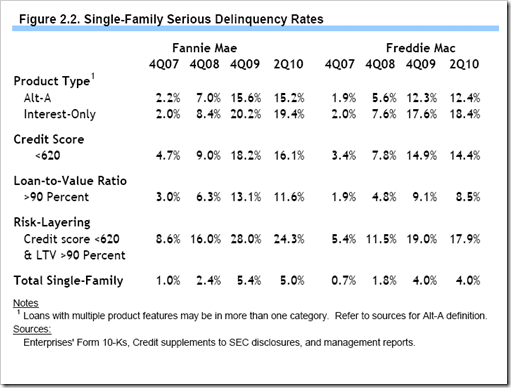
The Big Picture blog has a post about Freddie and Fannie. What I found interesting was figure “2.2” (the 4th? one down). This is the data I was talking about some time ago about how Canada isn’t as different as we think we are. You can see how having a bad credit score lead to higher rates of default, but having high LTV (i.e., low downpayment) was also a large risk factor, even without having a low credit score (having both was terrible). And Canada definitely has had a lot of high LTV mortgages written in the last few years, even if “subprime” isn’t as bad.

The Neurologica blog laments science education in the US. A topic near and dear to my heart.

Thesis sabotage. Just the thought makes me shudder.

Tater’s Takes – Creatures of the Night

July 6th, 2010 by Potato

My mom used to freak out when I’d go grocery shopping or something at 4 am, largely worried about the freaks that might prowl the nighttime.

For the most part, the people out and about at 4 am are like me: pasty, sun-starved geeks and shift workers, university kids stocking up on snacks, or sleep-deprived dads picking up diapers and pickle-flavoured ice cream.

But this weekend was different, aside from myself the people out prowling the streets seemed to be right out of my mom’s nightmares: a greaseball guy with a skinny twig of a girl 20 years younger than him who had a thick eastern european accent and dressed like a total ho, and a guy fresh from a goth/industrial concert wearing a leather vest, leather pants, and combat boots, and a grimace (probably because he was wearing head-to-toe leather in this heat).

Anyhow, while I have been consistently underperforming my daily exercise goals, my distance for bike riding has been going well. Unfortunately, I gained another pound this week, and now the heat is on, so the exercise is likely to suffer — and if not, I will (I’m sure the public health guys would agree that being fat is better than getting heatstroke in this nonsense).

Since I’ve now gone back up to the weight I was at when I started this plus a pound, I’ve opened the contingency envelope, which contains the nuclear response plan for just this dark scenario. I can only tell myself that muscle weighs more than fat and that all the exercise is doing the trick for so long, it’s time to take action. The diet has to be stepped up (or, technically speaking, down) a notch. I’m also going to have to become lamer and spend more of my time working, working out, and sleeping, and less blogging, having fun, and reading about non-science stuff. Sleeping 4-5 hours a day while trying to churn out papers leads to lots of late-night snacking, which is not helping.

Housing stuff:

Mr. Cheap at MS defuses the idea of your house being your “best investment”, but thinks that the overpricing in Canada will lead to a flat market for a few years until fundamentals catch up, rather than a crash/correction, like I’m calling for. I think that he’ll be proven wrong in short order, especially given that:

Prices in Toronto have already come down 5% last month [down 2.6% for the GTA as a whole]. I don’t know what the typical May -> June seasonality is, but I don’t imagine that June is traditionally all that weak [it was flat in 2008, and up slightly in 2009]. The TREB releases focus on year-over-year numbers, especially when the month-over-month looks bad for them (or year-over-two-years-ago when the year-over-year looks bad for them).

BNN had a housing bear on today, which may also be telling. He’s predicting prices to go back to where they were in 2005 (before the CMHC rules changed and “rampant speculation” began), which would be a 26% decline for Toronto, and he’s saying that will happen around mid-2012. I’m a little more pessimistic, counting on ~35% decrease for Toronto, but also more patient, figuring that the bottoming out will be in 2013-2015.

Other stuff:

Woot is being bought by Amazon, and their letter announcing the deal is a fun read. They also poke fun at the AP today for stealing from their amusing letter, poetic since the AP wants to charge others for quoting even short snippets from their stories.

First London StarCraft 2 LAN party planned for August. Unfortunately, SC2 won’t have LAN support (unless we can change Blizzard’s mind!), so we’re all going to have to connect to BNet over the host’s internet connection. If that fails, we may have to play something else…