Word on the Street was super depressing.
It was the first time at Harbourfront, and there were road closures and a Jays game (who are actually popular at the moment) working against it, but on the other hand the weather could not have been more perfect for an outdoor festival.
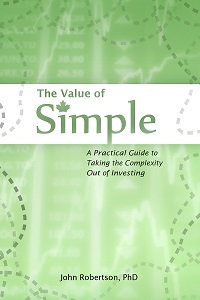
I have a lot to complain about, and that’s pretty much all this post is, so feel free to skip from here if you like. One note before you go: the lack of attendance means I have a lot of inventory on hand at the moment, so I have extended my free shipping offer if you buy the Value of Simple from my direct site.
First is how confusing the new Queens Quay is as a roadway. I was just commenting to Wayfare about how weird it was and how all the reports I’d heard of collisions and streetcar problems were making sense after seeing it for myself. We saw an SUV make a left turn against the left-turn light (but there were four other green lights on at the time and no one coming the other way, so kind of understandable), and I said someone’s going to not expect the streetcar to be coming up on their left, not see the red light for the turn, and hit it one day. Well sure enough the next light cycle that’s exactly what happened. The guys manning the gate at Word on the Street said it was the second such collision they’d seen that weekend, which sounds crazy to me.
Harbourfront is not a great location for an event like this because it’s so isolated down by the water: it’s not on the subway, it’s hard to drive to, and people can only approach it from one direction, which leads to a lot of congestion as people move in and out at peak times.
Then parking is such a rip-off at Harbourfront. It’s not just that it’s expensive, it’s expensive in a really aggravating way. WotS officially ran 11am-6pm. Parking was flat rate, pay-in-advance until 6pm, and then a second flat rate pay-in-advance if you stayed after 6pm. Well, I had a booth that was supposed to be open until 6, so I figured I wouldn’t be leaving until 6:30 or so with teardown and stragglers and packing up, and had to make that call in advance. But as it turned out other people started packing it in early, which led to the attendees filtering out early, and then the organizers started tearing down the signs early and telling people to be ready to move out because getting cars on site to unload everything was going to be a nightmare. So we were packed up and out of the parking spot by 6:05pm — that 5 minutes of parking cost $14 because of the flat rate system with the really stupid break point. For a 6pm event, stretching the parking flat rate to 7pm or so would have made sense, but no, they had to try to gouge the exhibitors those last few bucks. That also likely had an effect on the attendees disappearing by 5:30 — those who drove were probably aiming to make sure they were long gone by the 6pm cut-off on the first rate. And one more parking/Queens Quay annoyance is that there isn’t a right-turn lane or right-on-red allowed to get out of Harbourfront, so at each light cycle all the pedestrians would block the cars from turning right, who would then block the cars from going straight, and it took forever for people to just get off the site and on to the road, two cars per light cycle at a time. They could have really used a cop or two directing traffic to get a few more in a row getting out and going.
As for the festival itself, it was very weirdly laid out — and from my vantage point — a practical ghost town. To be clear, there were a fair number of people in attendance overall, but it was very unevenly distributed.
On the layout, it was spread around Harbourfront, with buildings separating it roughly into thirds. There were many people who had no idea very large sections of WotS existed because they didn’t go through one or both of the buildings to explore the other parts. There were many, many lost people, and not many maps or signs saying things like “more WotS this way!” I think they needed to define a traffic flow pattern and put some arrows down to help people hit all of it, or even just put up more signs saying “independent authors this way! More kidstreet this way!” I think we spent more time at the booth helping people find other booths than we did selling books and talking about investing. I heard from other people that were touring more of it that other parts were much, much busier than where I was, but even then there were a lot of dead pockets: a tent might have been divided into four booths, one facing each direction, and two sides of it would get no traffic, with people not even knowing they could go around the other side of the tent. Or booths set up in weird, dead corners — the kids area had a healthy crowd, but most of it was set up outside and the stuff inside was so dead that Wayfare took a break to sit down in a corner in there and do some work on her laptop.
My location was terrible. They put booths facing both directions down a little alley between the buildings. That alley did not get much foot traffic in the first place, and splitting it to either side further cut it down. Unfortunately it wasn’t evenly bisected, so ~3/4 of what traffic there was went down the side opposite me. In the sales material for authors they highlight that (in the past) 225,000 people attend Word on the Street. I had maybe 2,000 people walk by my booth all day. Not stop to chat or even let their eyes focus on the signage, just walking by in total. I didn’t have a great view of the main entrance, but I know what 50,000 people at a Jays game looks like and I don’t think there were even that many at the whole event.
To talk business for a sec, I had brought just under 100 books, hoping to sell nearly all of them, plus 200 bookmarks to give away and 100 postcards with some quick facts about RESPs for all the parents with little ones that would be going for the kids stuff. But because of the segregation there were hardly any parents coming by — the kids’ stuff was on the other side of the Harbourfront building and they had no reason to come down my little alley (those who did to go the long way around to the TVO stage did so on the other side of our tent where the alleyway was wider). I only managed to give away (for free) maybe ~40 RESP cards and ~60 bookmarks. I sold 14 books (I needed to sell ~55 to break even on the day).
I know it was hard in advance to figure out if this would be worth it for me — I couldn’t find other authors blogging about this or similar events. So I went through a bit of a Fermi calculation, figuring that of the wildly inflated 225k attendance figure, maybe 20k would make it within sight of my booth (which would average just about a person walking by per second over the 7 hours — basically some decent milling crowds, which fit well with my memory of past events and didn’t seem too extremely optimistic). Then of that, maybe 5% would be interested in the topic and slow to have a look, and maybe 10% of those interested would buy a copy after talking for a bit — which would have worked out to selling a book every 5-10 minutes, and a healthy margin of error above the break-even level. The big kicker for me is that I actually wasn’t too far off on those estimates that should have been harder to guess at — about 4% of those who did pass by did pause to pick up a card or bookmark, and possibly chat for a bit; about 17% of those did make a purchase — it was that first traffic number that was off by an order of magnitude that spoiled the predicted success. (Though I did vastly underestimate how much time people would need to talk about investing before making a decision on whether to buy the book).
Now I made some marketing mistakes that could have helped get people who did walk by to stop and check it out in more detail, the biggest one I think was to prominently feature the cover of the book in a large, eye-catching poster when instead I could have used that space for a large, eye-catching poster that somehow got people to stop and check out the book — whether that was summaries of reviews, a few bullet points about how the book helps, or leading questions to get people to come in. But the fact is whether my “conversion rate” was a factor of two or three times better just wouldn’t have mattered given how little traffic there was there in the first place. But either way, from a business perspective, WotS was totally not worth it for selling books (or even just exposure — only 10 people visited the site today).
Of course, all this whining about the space and layout and lack of traffic is from the point of view of an exhibitor. As I was writing this I saw on Twitter someone praise this year’s layout, because it clumped together all the booths on that person’s hit list so they didn’t have to walk around the whole event: just a surgical strike to one corner and they were out. Wayfare rather liked the extra stage space that Harbourfront offered because it made it more of an “event” versus the book sale frenzy it started off as. Which highlights part of the problem for people like me: it does no good to bring in tens of thousands (if not the hundreds of thousands in past years) of people to see big-name authors or local magazine offerings or kids’ musicians or whatever if those are all clustered together and then hardly anyone explores the rest of the event.
I recall in past years that everything was laid out fairly logically, so you knew where to go to hit everything (up and down Queen St., or around the loop in Queen’s Park, with IIRC a bit of a grid of tents in the middle). Most trade shows are similar: nice, neat rows so you can come up with some kind of logical search path and hit most of the things to explore. And then the vendors are somewhat randomized in there, so you get a reward for exploring further — ah, another SciFi (or whatever you’re into) booth down this row, let’s go (and also stumble on something nearby). Here it was confusing, and the clustering meant if you were primarily looking for one thing, there was no reward for exploring further (and because it was confusing, if you did want something else you had a hard time finding it).
Harbourfront offered more large stages/auditoriums for particular events like the performances from TVO shows for kids, or authors doing readings, but it also brought those people away from the rest of the festival, again segregating more. But, it was more of a “cultural event” — which is fine for attendees, but vendors should be wary.
So in short, from the perspective of a local author, in one of the dead spots in the layout, I think the new Harbourfront location for WotS was a complete bust. Possibly the old ones were too and I was just mistaken in my attendance assumptions or got swept up in their fancy marketing (though if you do a google image search you’ll find more people with umbrellas in the rain at Queen’s Park than on an absolutely gorgeous day at Harbourfront). Either way, for those following along here for self-publishing anecdotes, it looks like a booth at a generalist literacy event is not a great choice for spending your precious marketing dollars (unfortunately not much else is).
The other reason it was depressing was the reasons people were giving me for not buying the book. There’s the usual catch-22 I’ve faced with the book all along, too: those who are interested enough in investing to stop and have a look at the book generally don’t feel they need an introductory, practical guide because they’re already doing it. Those who could really be helped by a book like this just walk on by without making eye contact. That sort of thing is helped a lot by audience selection at other events like Money 201 talks at the library. But while I haven’t come up with a good solution to the problem yet, I’m used to facing that one. What was really depressing was seeing so many people with debt problems to tackle before they could even think of investing. So many who didn’t even want to try to learn, because “simple investing” was an oxymoron. A few who at one point I thought must have read my blog and were out to troll me because they didn’t need to invest because they had real estate. I didn’t give anyone the RE bear hard-sell, but when I mentioned that this offered an easy way to diversify, one guy actually said he didn’t need to “because it’s different here” — he said the literal words and I was like “Am I on camera here? Is this really happening?” A few were a little older than me, and didn’t like the sounds of moderate, long-term growth that focused on costs — they needed to beat the market and get rich quick because they didn’t have enough time left to save for retirement the slow way.
Fortunately, 100% of parents at WotS already know about and use an RESP for their kids.


 Passiv is a tool that can connect to your Questrade account and make it easier to track and rebalance your portfolio, including sending you an email reminder when new cash arrives and is ready to be invested.

