To Put It Another Way

September 25th, 2014 by Potato

Once again I saw the “but if I buy a house I get something back. If I rent I get nothing back. Even a small return is better than zero…” trope about renting vs. buying. This time I answered it slightly differently, and maybe this explanation will stick:

You have to look at the whole picture.

Give me $10. I will buy you a bag of chips and give you $2 back. Hey, a small return and a bag of chips, that’s good, right? But if you can just buy the bag of chips for $5 you’re better off — you can hold on to $5 out of your $10, rather than just $2. There’s no “return” in the second case, but you put out less to begin with. In both cases you get delicious chips.

So it is with housing. The key thing to appreciate is that all discussions of “building equity” and what-not are distractions: at the end of the day, living somewhere is going to cost you money. This is where the details matter: how much money for each option? If the total cost of owning (interest/opportunity cost, transaction costs, upkeep, insurance, property taxes) is more than the total cost of renting (rent, tenant’s insurance) for the same place and you invest the difference, you’ll do better renting.

Cover Design Update

September 24th, 2014 by Potato

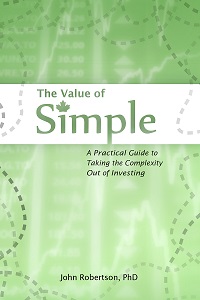
I had originally scheduled a minor reveal post today where I was going to tell you all the amazing title of my amazing new book and provide an amazing (-ly short, for me) synopsis, to start building something I’m told is called “buzz.” Big with bees, I hear. Anyway, in talking with some people about that the point was raised that maybe I should keep totally silent until the book is actually available for pre-order (rather than the pre-pre-order state it’s in now where you email me and I add a mark to my tally to guess how big to make the initial print run). I think I will explode if I wait that long, so I’ll probably just end up publishing that reveal post tomorrow anyway.

I got the first drafts of the cover concepts back from my artist today and I’m quite impressed. There was a concept that some people liked because it really said “this book is about doing stuff with money.” But it was the first one I threw out because it was so generic. The one I immediately decided was the one is a bit different, which I hope means that it will stand out on the shelf and make people pick it up. Hopefully only another week or so then until I can swap out the teaser image on the right with the actual cover (unless I listen to reason and wait until pre-orders open).

I still haven’t set a firm date to take PSGtDIYI out of publication yet. Expect that it will happen suddenly on the same day that (firm) pre-orders open for the new book.

I’ve had to enter pricing information to get my ISBN* and UPC code, which means I had to decide on pricing without having a proper public hand-wringing about it. I can still change it, but I think I’ve settled on going a little bit cheaper than most of the books out there (which have a list price of $19.95 but actually sell in the mid-high teens). I went with what looks like an odd price, so that with HST (5% on books) it will come out to an even dollar amount if you’re paying cash. I don’t really know how much something like that might phase people (or please them). I also don’t know whether being a few dollars under the $19.95 cluster is attractive or gives off a “stinky kind of cheap” aura.

* I have an ISBN assigned. Several, actually! Squee!

We Have TFSAs Now: Lose the HBP

September 18th, 2014 by Potato

A little while ago Rob Carrick idly wondered on his facebook page/discussion group if the home buyer’s plan (HBP) was a good idea. In case you’re not aware, the HBP is one of the few ways you can take money out of your RRSP without paying tax on it: you can pull up to $25,000 out as a first-time buyer, and repay it over the next 15 years. The HBP primarily accomplishes two things.

1. It lets people contribute to their long-term (retirement) savings with an “out” to use those funds for a down payment on a house/condo. This way they can save for the future without having to plan what will be house funds and what will be retirement funds.

2. It lets people get a tax refund on their down payment that they can also use on the house right away, effectively borrowing from their future selves. In the short term, it’s an incentive to buy.

On top of this, it has a psychological effect: home ownership and post-secondary education are the only sanctioned reasons for borrowing from your RRSP. Add how irrational people can be about taxes and tax deductions, and it’s a bit of a sacred cow. In the right light (octarine?) it looks like the government encouraging buyers to reach for as much real estate as they can, using everything at their disposal (including their RRSP).

With TFSAs in place now though the first point is well taken care of by that tax shelter: you can easily throw all your long-term savings in there as a young person, and if you need to raid them for a down payment (or whatever) then you can, even in excess of $25,000. Plus it’s already set up to be indexed to inflation so we won’t have to worry about future whining that the HBP isn’t big enough. As for point two, I really don’t think we need any more tax incentives or holiness attached to housing, so doing away with the HBP in favour of encouraging TFSA use would suit my politics just fine.

To be fair, this may need a few years for transition, and would present a bit of a savings conundrum to people who get employer RRSP top-ups, but I find it hard to feel that’s a major flaw in my plan. Let’s simplify the RRSP that one extra step, and phase out the HBP.

Potato’s Third Law (of Finance)

September 18th, 2014 by Potato

Clarke’s third law:

Any sufficiently advanced technology is indistinguishable from magic.

Potato’s Third Law (of Finance):

Any sufficiently complicated analysis is indistinguishable from magic.

A few months ago, Brad Lamb posted this inane thing, suggesting that buying real estate in a highly leveraged way beat out investing in any kind of normal way because, with an average 5.5% return over 30 years and lots of leverage, you’d make scads and scads of money. Of course, that’s clearly a biased and overly simplistic analysis from a source that is, well, you get it. For instance, one important consideration in using massive amounts of leverage (95% in his example) is the cost to borrow. And if you look it up, over those same years the (simple) average mortgage rate was 9% — blowing the 5.5% appreciation out of the water.

Obviously there are lot more factors at play than just appreciation, but many people will have trouble following the red lady as these condo kings play their three-card Monte.

Similarly, Melissa Leong recently wrote about Sean Cooper‘s quest to save at an incredible rate and pay off his mortgage crazy early. While her article was very fair and level-headed, someone at the National Post decided to put this sensationalist caption to the preview: “Sean Cooper’s secret: He rents main floor of his house, while living in the basement and bikes and uses TTC instead of a car.” [emphasis mine]. While only part of the numbers are shown, if you work the math and make reasonable assumptions you get a fairly unsurprising result: he ends up paying about $800-1000/mo to live in the basement of his house. Which is what a basement apartment including utilities costs in that part of Toronto. Renting out the main floor of his house is no secret at all — the progress he’s making is solely due to the other insanely frugal and hard-working things he does, like biking everywhere and avoiding taxis or car ownership, working multiple jobs 7 days a week, and reusing everything to the maximum. The fact that he’s renting out part of his house is pretty much irrelevant to the story, but it looks like magic because it’s complicated and because for some reason being a landlord is high-status. Indeed, given the timeframes he’s been working under, he would have done much better doing all the hard working and frugal things he’s doing but plowing his money into index funds.

When there are a lot of factors in the analysis people just don’t want to deal with it. It all bleeds together and acts just like magic, so it becomes hard to critically assess what’s being presented. This happens a bit with a few topics in finance like investing, but it seems to be most prevalent — and most exploited — in real estate.

Take for example the terrible condo ads around Toronto that should be banned for what they try to get away with in the condos=magic department. Here’s a recent collection tweeted by Ben Rabidoux:

To pick one, the Thompson Residences in case you can’t read the image, it claims an 18.6% return on investment (such precision!) with no attempt to back it up (the fine text the asterisk leads you towards just says something about the parties not warranting or representing any of the figures). Another (Axiom) also claims 18.6% returns (they must have done some market research to show that this completely made-up number has some truthiness and feels more correct and gets people to buy than some other random number), this time on the unlevered condo. Of course they don’t provide the full details, just assuming that you’ll rent the place for $2355/mo (such precision — also that gets you a 3-bedroom detached house in many parts of Toronto, but sure, let’s just go along and assume a 1-bedroom downtown-ish is worth that because… George Brown?), and somehow make $685 in positive cashflow and $607 in principal repayment. So after interest (at just 3%) you’ll only have $227/mo for tax, maintenance, insurance, and condo fees (yes, that’s totally reasonable — oh wait, no maintenance fees for a year, of course that’s a representative calculation then). But then you take those phoney rent profits and add it to their phoney price gains ($58,993 — yes, also down to the dollar) and you know what you get? 17.8%. Not 18.6% like they say.

Clearly these ads are not targeted at the careful, numerate buyer — they can’t even be bothered to make their fake numbers internally consistent.

Where was I? Right, magic. Well, there’s clearly some smoke and mirrors going on in those ads.

Tater’s Takes: Tax Refunds Are Not Windfalls

September 11th, 2014 by Potato

I haven’t had a Tater’s Takes round-up post in approximately forever. Preamble: early summer was crazy at work, so it was good that I finished the draft of my book in the spring so it could sit with the editors over that time. Several people now have copies in their hot little hands and are providing great feedback so I can make one last round of polishing before I start getting proofs made up. I’m getting super excited for the book. I’ve put a tonne of effort into it (way, way more than I expected when I thought I’d just make a PSGtDIYI 2nd edition) and I think it’s shining through in the manuscripts. Most people who haven’t gone completely silent have praised the initial copies, particularly novices to finance (the target audience). There’s still almost two months to go before I run out the clock on the window to hear back from publishers, and at this point I almost want to get rejected because it’s just so close to being ready to go in the self-published route that it would hurt to have to pause to work out the details with a traditional publisher.

Blueberry is (as every proud daddy will say, I’m sure) uncanny smart sometimes. Like most toddlers, she has become attached to a blanket as her “lovie”. We’ve heard the horror stories of kids who lost their lovies or those that get disgusting because it’s hard to separate them long enough from the child to wash, and Wayfare planned in advance. We bought multiple copies of the blanket in question, and have kept them in rotation so there’s always a clean one ready and so that they all have the same degree of wear. These blankets are identical in every way, right down to their electrons sharing the same spin states. So we were caught completely off guard when Wayfare surreptitiously did the blankie swap for laundry and Blueberry instantly noticed and freaked out. How could she tell? How could she tell so quickly and decisively? Baby genius, that’s the only answer.

Ok, links.

First up is yours truly, scraping the bottom of the barrel for active investing ideas. I hardly post at all on that topic, and considering I’ve got a book on how easy index investing can be coming up it was best to shunt it to another venue. Nelson was kind enough to host this post on HNZ over at Financial Uproar.

I’ve just discovered Steve at Kapitalust. I’d suggest starting with this recent post on the intersection of ethics and investing.

Sandi’s back! Or semi-back, as someone else takes over half-way through.

Robb at B&E preaches about the inevitability of changes to embedded commissions for advisors in Canada.

Michael James has a new twist on comparing car salescritters to mutual fund salescritters and why embedded commissions make more sense for one than the other.

Oh, so this is public now.

Dan at OBFW reviews a new book (not mine, despite what you may think when you see the title — I’ll unveil the title of mine in just a few more weeks, be patient kids) and raises an interesting question: “Would you rather get a $1,000 windfall at age 27 when you are trying to scrape together a down payment for a house or a $1,300 windfall at age 70 when you have close to $1 million in savings?” in suggesting that young people use their RRSPs over TFSAs (and spend the refund).

I think that’s unfortunate framing. A tax refund on an RRSP contribution is not a “windfall” — it’s a deferral of a government obligation. Michael James puts it best when it calls it the government’s share of your RRSP. Of course the short answer is that if you really need the money to buy a car or pay down debt then you should just use the money for that rather than investing it and then redirecting a part back towards the more urgent need in a roundabout way that involves filing paperwork with a large government agency. But let’s do the math on this suggestion:

Let’s say you scrape together $1k to invest while you’re in the 20% tax bracket at 27, and expect to end up withdrawing in retirement at age 70 in the 31% tax bracket. We’ll use 6% real returns. If you suddenly realize, no, you need $200 of that back to pay down some debt you forgot about or to buy something shiny, then you could either put just $800 in your TFSA, or contribute $1k to your RRSP and spend the $200 refund.

If you just trusted your original decision to invest $1000 in your TFSA, you’d have $12.3k to spend in retirement. But to be more fair, the invest-$800-in-your-TFSA scenario would leave you with $9800 to spend at age 70. If you put the $1000 in your RRSP and got a $200 refund to spend on stuff then you’d only have $8453 to spend after the CRA took their cut in retirement. Spending the government’s share and mistaking the TFSA vs RRSP issue adds up to a much bigger deal than just $1000 when you’re young or $1300 when you need it less — you could spend the same “windfall” amount on whatever necessities you have when you’re young in that case, still use your TFSA, and come out way ahead.

If you only decided to spend the refund because it came months later and you were weak (and you didn’t get commiserate value from the dollars spent), then picking the RRSP over $1k in the TFSA would be like borrowing $200 from your future self and paying an interest rate of nearly 7%. But, maybe spending $200 now is more important than spending $3847 when you’re 70 and don’t need it. Of course that logic of “X now is more important than Y later” can lead to a lot of debt if you don’t put some reasonable limit on it.

Nelson also posted about why he prefers the RRSP to the TFSA. I left a weak, off-the-cuff comment about why I still like the TFSA. One other point that came to me when re-reading it is the issue of the refund timing: if you run the math, assuming you’ll be in the same tax bracket before and after retirement then the two shelters come out neck-and-neck in terms of outcomes. If you end up in a lower tax bracket the RRSP provides an advantage; higher and the TFSA will win out. However, the canonical comparison assumes you invest with pre-tax money and avoid withholding (or have the funds available to invest the refund in advance). In practice not only do people run the risk of squandering the refund, it also tends to come later, so the TFSA gets a tiny, miniscule head start on compounding (when looking at it from multiple decades in the future). Anyway, nitpicky.