Other Rent-vs-Buy Calculators

August 22nd, 2014 by Potato

I’ve done a lot of things I’m proud of. I think the rent-vs-buy spreadsheet has to feature somewhere near the top of that list (at least if we limit the discussion to things I’ve done for personal finance). It’s the only such calculator to let you include the risk of future rate increases, and includes many important factors without completely blowing the whole thing open to the maze of apples-to-basement-suite type comparisons. Rather than starting blank or with valuations that may have been relevant in 1995, it’s prepopulated with recent data from Toronto (and every 6 months or so I even update the interest rate projections based on what’s available in the mortgage market). Moreover because it’s a spreadsheet you can check the math (or tweak it to do an apples-to-basement-suite comparison) if you so choose.

Really the only drawback is that it’s a spreadsheet rather than a flashy widget (and I keep meaning to get around to learning how to code those but it’s just too big a time commitment for me now), which seems to hurt its popularity. Because other rent-vs-buy calculators are still popular, let’s take a tour through the options.

New York Times: The NYT calculator was updated recently. It takes a neat approach in that instead of getting you to tell it what the cost of rent is, it computes what the equivalent breakeven rent would, and leaves it up to you: “if you can rent for less than this, then rent.” It also has itty-bitty graphs that show you the sensitivity of the outcome to each factor. Now, I prefer my approach because it’s clearer what the magnitude of that is. Maybe you can rent for less, but if it only works out to $10k more over 10 years, maybe “pride of ownership” is worth that. Or maybe the difference merely looks small when expressed in monthly terms: if NYT says to rent below $2500/mo and you find a place for $2000, maybe that sounds like it’s close enough to break-even that you’ll just buy. But if you saw how quickly that difference compounds into hundreds of thousands of dollars, maybe your decision would be different. There’s no way in the current NYT calculator to enter your market rent to make a comparison.

My main beef with the NYT calculator is that you have to tweak it for Canadians in really non-intuitive ways. The big change is that you have to set your tax rate to zero — in the calculator it’s not the investments that are being taxed, but that Americans get a tax deduction for mortgage interest. I think the NYT one is the most-recommended one out there. Even Rob Carrick recommends it on a regular basis, which stings because the refinements to my calculator came about through discussions on his facebook page. Rob Carrick why don’t you love me??? Ahem. Anyway, it’s not bad — actually rather good if you’re American — it’s just that the link doesn’t usually come with the appropriate Canadian conversion kit, and there are Canadian calculators [waves] available.

Getsmarteraboutmoney: This one IS BROKEN. Stop sending people to it. I talked about the “wonky” results back in December, and emailed them about it as well. They acknowledged the problem back in March and said they would fix it soon. Well, it’s still broken and there isn’t even a notice on the webpage about it or anything. The main problems are that it always sells in year 30, so you can’t compare other holding periods (even though the graph visually implies that it is looking at break-even times), but the larger error is that it does not compound the differences in cashflow between the renting and buying option. That can really skew the difference between the options over a long time period. Otherwise it is flashy and pretty and has sliders for all the right things, so it should be good to go in a couple of years when they finally fix the back-end calculations. Of course, that just makes the math errors that much more tragic because it looks like it should be fancy and trustworthy.

RBC: To be clear, they call it a “rent or buy calculator,” not me. It is simply not a calculator to compare the two options. The only inputs are how much you pay in rent, what interest rates are, and how long you want your amortization period to be. Then it tells you how much house you could buy with a mortgage payment “equivalent” to your rent — note that it ignores tax and maintenance and opportunity cost and insur– just all the costs. Every ownership cost you can think of, it is ignored. I’m hoping it ranks so highly in Google because they bribed someone and not because people are actually linking to that POS.

In fact as a short-cut, if a rent-vs-buy calculator doesn’t have an input for your investment return as a renter, just throw it away. It’s likely missing a number of other important factors for the decision. Naturally, Genworth’s is similarly biased, as are most of the other big bank ones. CIBC’s is not that bad, but it does miss transaction costs and insurance. Its rates of return for a renter’s investment and the house are are unhelpfully labelled “market appreciation” and “rate of return” — you tell me which is which.

First Foundation: They recently launched their suite of calculators, including a rent-vs-buy calculator. It seems to do all the calculations properly and includes the most relevant factors. I could nitpick and add the ability to include future rate increases or whatever, or to start with all three tabs open, but the only real criticism I have of it is that the default for maintenance is zero rather than some wrong-but-better-than-zero approximate number. Also, the property taxes are annual while the maintenance is monthly. It’s explained in the tooltip, but the average user buzzing through it might get wonky results before realizing the problem. It’s not mine, and I can quibble, but the math checks out and it includes the important factors others often miss — First Foundation gets the nod.

Money Geek: I opened it up and I was like “nnnnnnuuugggggghhhhhhhh…” as my brain started to overload. This must be how other people feel when they open one of my ridiculously overly detailed spreadsheets. I can’t actually evaluate it because it only works in the bleeding-edge versions of Excel. But it’s there if you can get past that technical challenge.

Yahoo Finance: I’ve seen this exact one around on other sites, so it must be a licensed calculator/widget. Anyway, all the tax issues of being American, without the benefit of sensible defaults (0% selling cost yet 5% house appreciation?). It’s also a little odd in that it subtracts the opportunity cost of investing the down-payment from the owner’s side rather than adding the value to the renter’s side — I haven’t thoroughly tested it to see if that still gives the correct results but a spot test looked in the ballpark.


The Art and Science of Cover Design

August 19th, 2014 by Potato

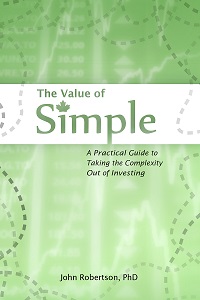
The cover to Potato’s Short Guide to DIY Investing is something I designed myself one weekend. It’s fairly uninspired in terms of layout: block lettering on the top for the title, a fairly plain image, and then my name. It’s black-on-white so a bit more dull than the typical book, but I think the art piece of my physical $10 bill origami bunnies (with hand-drawn eyes and whiskers — no photoshop there) overlaid on the graph that forms the central message of the book was, well, pretty good. I mean, the book even heavily featured bunnies so it works well.

Still, it does look kinda amateurish in hindsight. So I’ve retained an artist friend to help me create a wonderful new cover design for [new book: title to be announced soon]. I’m trying to come up with some ideas of where to start.

Many personal finance books fall into a few basic categories for cover designs. You have your author lounging in a suit ones, like Preet Banerjee’s, Dave Chilton’s, Peter Lynch’s, Jim Cramer’s, and a whole host of others. Then there’s the really, really ridiculously long title so that the whole book cover is just text school of thought, like Rob Carrick’s and Gordon Pape’s. Some are more academic: plain, with some text decoration at most, like the Intelligent Investor (some editions, anyway) and the Little Book of… series, but not as crowded as the other textual school of thought. Then there is the Cult of the CGI Piggy Bank, which covers nearly every other personal finance book out there. I think Millionaire Teacher had one of the more unique covers, but I can’t say whether that actually helped it sell copies.

So in preliminary discussions on how the cover should be designed this time I’ve decided that I’m not going with the lounging-in-a-suit type cover: no one knows me, and I’m not that pretty. The pig is out, that is just a complete non-starter for me.

Rather than plain white the base of the cover will include some colour. I don’t know if I will go with a conventional title on top, framed image in the middle, author on the bottom, or something else — we’ll play with it. A refresh of the bunnies is possible (not necessarily origami money), but now the bunnies occupy much less of the book*.

A maple leaf is in. Everyone agrees on that, and many can’t believe I didn’t work one in to the first book’s cover. A clear oversight on my part for a book focused on Canadians — though at least my bunny origami was made from a recognizably Canadian $10 bill. How else are they to know? (Other than reading the synopsis, that is.)

Beyond bunnies I’m having trouble of thinking of anything unique and creative related to this book. How do you say, in a visually appealing way, that this book will walk you through investing in a friendly and helpful way? How do you say that this will help you cut out the noise and focus on what matters? Is there a visual metaphor for “index fund good” or “here there be ETFs”? Or should I bring in tropes from other genres, like a long-haired man with oiled musculature ripping asunder the bodice of a flushing maiden arching her back with an impossible curve? Spaceships flying through asteroids and nebulae (mentioned nowhere in the book)? A full moon with mist on the moor?

Actually, let’s revisit that assumption: is unique and creative something to shoot for at all? There are hundreds of personal finance books out there, but maybe if I get too creative with the cover it won’t look like a PF book (or like a respectable one)? Have these few tropes evolved for a reason?

Any brainstorming thoughts or suggestions to add?

Note: if I get a publisher they will likely take care of the cover art. But I’m proceeding as though it will be self-published before the end of 2014 until I have a contract in my hands to the contrary.

* – All the existing bunnies made it over to the new book, but there are no additional bunnies despite the near-tripling in length, so proportionately fewer bunnies.

Sustainable House Prices?

August 11th, 2014 by Potato

While there may be great disagreement over whether a crash is coming, most people can agree that

    1) this past decade has seen an incredible increase in real estate prices
    2) that this rate of growth cannot continue forever

The issue is that the ultimate barrier and outcome is not so clear. Some think prices could continue at high-single-digits growth until Toronto is approximately as expensive as London or Tokyo (or Vancouver!). Others (such as myself) don’t think Toronto incomes can support that level — indeed, there is a question as to whether the current level can be sustained.

The Toronto market has started to segment in the past few years: condo price appreciation has moderated, while detached houses have gone on a tear (especially those under the new $1M CMHC cap). In the last post I was trying to figure out whether there were enough rich people to support the current prices — if we had already crossed the point where a soft landing is impossible. If price increases do abate, but the levels stay this high relative to incomes and rents (a soft landing), then houses will continue to turn over year after year like this — are there enough households rich enough to keep buying for decades to come in a soft landing? I have my doubts, and tried to put some math to it.

I think it’s getting close to the breaking point if it’s not already past it. Note that there is nothing stopping the market from running well past the point of sustainability — just that once it does a soft landing is nigh impossible to pull off.

Toronto Is Running Out of Rich People (to Sustain the Housing Bubble)

August 9th, 2014 by Potato

I normally like to look at the housing market from the bottom-up using a rent-vs-buy analysis. After all, you have to live somewhere and that’s the key to deciding what to do with your own life — the macro stuff will work itself out eventually over many years. I still like reading and thinking about the macro stuff, it just wasn’t really my area of expertise for analysis and Ben Rabidoux used to post a lot about it. But he’s not posting any more so screw it, let’s have a look at the Toronto market with some Fermi-esque math.

In 2013 the overall average price of a detached house in Toronto (416) was $842k; 11.4k such houses traded hands, according to TREB. Some of those would have been $500k crack shacks, while others would have been multimillion dollar mansions bringing the average up. TREB doesn’t publish median figures. Up in subwayville/North York a “normal” house runs for about $700k so let’s take that as a reasonable average for the city based on those numbers.

How much income do you need to carry a $700k house in Toronto?

Property tax would be about $5,600/yr.
The mortgage, if you want to use 4.5% to give yourself a small buffer against increasing rates, and assuming 20% down, would run $37,356/yr.
Utilities, insurance, maintenance, etc. we can ballpark at $10,000/yr.
Rough total with these minor contingencies/conservative estimates: $46k/yr.

Assume that the owners of such lavish mansions have other things to spend their money on (cars, daycare, hot yoga, Muskoka cottage, pusateri’s, retirement savings) so they want to limit their spending on shelter to something reasonable like 45% of their pre-tax income. That means they need to make over $100k to afford a house at this level. At least. Of the roughly one million households in Toronto, fewer than 120,000 180,000 290,000 of them have household incomes over $100k. How many houses are there to buy at those prices? If the average detached house turns over every 10 years, then there are only 110k or so.

That doesn’t look so bad: as long as everyone who has the income to do so is behind the current prices and willing to ignore traditional affordability rules-of-thumb (forever), they can be sustained.

Except that about a third as many semi-detached houses traded hands last year at an average price exceeding $600k, so we’re looking at at least another 1,000 sales and 10,000 units or so of semi-detached houses over our $700k threshold. A quick scan of MLS also tells us that there are still a few thousand units that cross our $700k level, even though condos may have an average price of less than half the detached/semidetached class. That’s another 15,000 or so rich families we need to be committed to the expensive property cause, getting us well within the error bars of the total number of rich people available.

Looking closer at that estimate of detached houses, it comes out kinda low — mining the StatsCan data suggests that there are closer to 300k detached houses in Toronto [edit: or if you have the power of Ben Rabidoux to find the correct table rather than subtracting others, you can say it is precisely 275,015].

I’ve heard the argument more and more lately that the housing bubble is just a new reality in Toronto: the days of an average or middle-class family owning a detached house — even in the burbs near the subway — are over, and such things are only for the rich. Condo living or extreme commuting are the new normal. Except current prices are so insanely high we don’t even have enough rich people for that narrative to make sense.

Toronto’s going to run out of rich people before all the houses can turn over. Fixing the income numbers, I can’t say definitively that Toronto doesn’t have enough rich people to support the house prices any more, but we’re still cutting it kind of close. The question circles us back to many people needing to commit to stretched affordability to keep the prices up, and with prices increasing every year how stretched can affordability get before it all falls apart? Unfortunately that’s been a question for a few years running now, and kind of depends on how insane people are willing to let things get. The longer interest rates stay low, the more willing people are to stretch every last dollar and throw out their contingency for rate increases. So the median detached house price is right now $700k. At what point does it rise enough that the question I raised here does become an issue — when is affordability stretched so much that there aren’t enough rich for all the houses? Maybe when the median price hits $875k, another 25% increase from here? So like, 2 years at current price increases?

[Edit: I had a report that put the percentage of households with incomes over $100k at 18%, and I had the total number of households as about a million. In the original post I multiplied those out to get 120k, failing once again at simple math. That report was based on 2005 data, I’ve since been informed the 2011 census figure is 26% of 1.1M households.]

Life Insurance Bete Noire

August 4th, 2014 by Potato

Just before Blueberry was born, we had a discussion about why we didn’t need life insurance for our situation. I’d like to broaden that discussion a bit, but I have to tread carefully. There are many who are under-insured not because they have decided that insurance isn’t for them, but because they just haven’t gotten around to it yet. I don’t want to encourage further procrastination (well, I do — don’t go off and work, read my blog!), and it can be very important for many people out there. But at the same time the insurance sale may be a bit heavy-handed and the base assumptions seem to increase the apparent need. Part of that may be my perspective: my value system is compatible with the idea that my survivors’ lifestyle shouldn’t be completely untouched (let alone improved) by my passing.

Here is why I’m out of the mainstream:

  1. my idea of dependents
  2. my idea of lifestyle of survivors
  3. my assets/situation

The idea of dependents is a bit of a strange one these days: kids are and always will be, but we are long past the time when the typical family consisted of one breadwinner head-of-household and a stay-at-home spouse (who was typically the female head-of-household). Many families are dual-income now, and even many of the ones that presently aren’t could be (modern stay-at-home mom or dad is likely university educated and had a career before getting hitched at an ever-later age and spawning). So your family would be without your income if you died, but they could still have some income. In our case, Wayfare actually has a much higher earnings potential than I do, and after Blueberry’s in school she could ramp up her hours worked to fully offset any loss of income from my death.

The assumptions of what the needs of survivors will be also seems a little over-the-top to me: some sites suggest full income replacement until you would have retired. But if I’m not there to spend part of that money, it means that my survivors would have an economically better life than if I were still there (except for the dark void in their hearts). Liabilities are also a typical factor in calculators estimating your needs: having enough to instantly pay off the mortgage is common, but seems to imply that they would or should stay in the same house, rather than downsizing, and that the surviving spouse wouldn’t be paying any of that down. For mortgagees, some insurance is a good idea because house prices can go down and transaction costs can be high, and you don’t want your survivors trapped and unable to extract the equity to move on.

The typical assumptions seem to imply that the survivors won’t make any adjustments in their life, work, or spending to compensate for the loss, which can lead to some large insurance needs. Instead, I figure that if I die, Wayfare and Blueberry will be free to move to a smaller, cheaper rental. There will be no need for a place so large with one person down (my whole dual-monitor home office set-up will reduce the room needs by one, and I don’t think Wayfare needs a kitchen half as large as the one I insisted on). And part of the reason for living in the over-crowded fourth circle of hell Toronto is the arcane arithmetic of the two-body problem and large populations; freed of that constraint they could move to a cheaper centre like Hamilton or London. Combined, a smaller place in a less-expensive town (or even less-expensive part of Toronto) could cut rent costs in half. On top of that is the significantly non-zero probability that Wayfare will find a replacement spouse who is gainfully employed.

Having a contingency so that these adjustments don’t have to happen right away makes sense, as does enough coverage for daycare until Blueberry is in full-time school. That’s where our situation also helps with my estimate of minimal insurance needs: we already have over a year’s worth of expenses saved up, and supportive parents who could provide an additional layer of security if we badly screwed up the math. As it turns out, my job came with group benefits for some measure of life and disability insurance (and it is the disability insurance I am more worried about).

Death is tragic, but from a financial perspective it’s not the biggest cause of young families losing an income. Divorce can not only rip daddy away, but cause massive upheaval and lead to a chunk of the “estate” being lost to lawyers. I’m ok with the idea that if I die, even with just 2 years of income for insurance coverage, my family will still be better off than those who started from similar circumstances and got a divorce. But I don’t want to make the delta so large that perverse incentives form.

Back to insurance: I actually found it quite hard to find ballpark quotes on disability insurance outside of my group plan. For life insurance I think it is important to disaster-proof your life, but the actual coverage need might not be quite as high as some calculators suggest, if you’re ok with the idea of your survivors taking basic steps to adjust for the loss.