Exciting Book Updates and Giveaway

May 15th, 2015 by Potato

I am so excited about the book lately!

Sandi and I got invited back to the Toronto Public Library for our Money 201 course. While that on its own was great, it also helped push the book over 500 sales! That’s not bad for a Canadian release, and the book is still building great reviews, which will hopefully keep the momentum up.

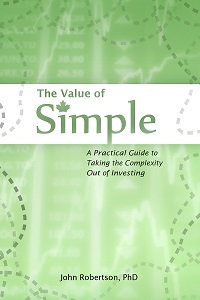
But that’s not the big news. The big, huge, over-the-moon exciting news is that Chapters/Indigo has put the Value of Simple on store shelves! I was just writing about how hard it is to get into bookstores, and just read another self-publishing guide that said to basically forget it as a goal, and then they go and pick it up! I went down to the Eaton Centre right away to visit it as soon as I heard, and there it is. It’s physically there, I can go and touch it or have my picture taken with it — my book, in an actual bookstore! It makes me feel like a successful author and not at all an imposter.

It is a limited release there — in about 25 stores across the country, and only one or two copies each, so it’s best to just go to the page at Indigo to check store stock rather than having me list them here. But the GTA, Ottawa, Montreal, London, Calgary, Edmonton, and Vancouver regions were the spots with copies as of this post.

While for sales this likely will not mean all that much — most book sales are online these days — it is a huge personal achievement, as I had fully given up on the bricks-and-mortar route so their purchasing people decided to stock it without me badgering them. The positive user reviews and decent category rankings must have worked!

I have a few copies here I’ve been holding back for giveaways on other sites, but at this point I think it’s clear that those guys are never going to finish their reviews1. So let’s build off this excitement and give a copy away here!

What you’ll get if you win:

  • A signed copy of The Value of Simple, in your choice of dead tree or ebook editions2.
  • A fridge magnet emblazoned with the glorious cover of The Value of Simple so you’ll have something to talk about the next time you have a party and for some reason everyone ends up mingling standing up in the kitchen instead of moving out to the couch and chairs where you so thoughtfully put the chips and dip…
  • Something else, because good-yet-underwhelming things come in threes, and I’m sure I’ll think of something by then. Until I do, let’s just say an envelope lined with bubble wrap that you can cut open and pop. Pop pop!

How to enter: leave a comment below for 1 entry. To make it a test of skill, eligible entries must either ask an investing-related question that they hope the book will answer, or talk about some part of the investing process you had trouble with. I know I’ve never done this before, but you can get a bonus entry for tweeting about this post (be sure to mention in your comment what your twitter handle is if you’re going to do that so I can assign the bonuses). Contest closes May 30. Canadian addresses only (and if you’re outside Canada, the book really won’t help you anyway).

Too excited to wait? If you’ve bought a copy through my store and end up winning, I’ll just refund your purchase (unfortunately I don’t have that power through my retail partners, but don’t let that stop you from using them… you can always use an extra copy to give to someone special. Did I mention it makes a great graduation gift? Convocation’s coming up…).


1. I would say “and you know who you are,” except that’s likely not true: given that it’s been over 6 months with a few reminders for some of them, it’s probably slipped their mind completely.
2. Yes, I’ve done signed ebooks before. You just have to sign a copy of the title page then scan it in and insert it into the file as an image. More work than for a paper book, but if you like ebooks and that personal touch from authors, nothing is cooler. Well, in the limited context of indie books, and largely because of the uniqueness — other authors just don’t do signed ebooks… yet. Because outside that context, man, it’s hardly cool at all in a world filled with lasers and chocolate ice cream-filled ice cream sandwiches. Anyway, if you want a signed ebook without winning it, you just have to go through my store and mention it in the comments (and send me an email for good measure).

Self-Publishing Interview with Kyle Prevost

May 11th, 2015 by Potato

[Back to the first post in the Value of Simple self-publishing behind-the-scenes series]

To cap off the self-publishing series I have Kyle Prevost, co-author of More Money for Beer and Textbooks, and also the host of the similarly titled podcast. He writes for a few sites around the internet, these days you’ll mostly find him at Young & Thrifty and My University Money. More Money for Beer and Textbooks is an introduction to basic personal finance geared for university students, with tips on budgeting, saving money on textbooks, and using credit cards responsibly.

Kyle spoke to me twice about his experiences with MMfBT, once when I was getting ready to publish my book, and again just two weeks ago for this interview.

MMfBT has two authors, so the process for them was a bit different, having a built-in ability to do some substantive editing and review before looking to freelancers and beta readers. They did higher a copyeditor and layout person – found through O-desk – and used a site called 99 designs to get the cover created. The duo reached out to a number of students in their target demographic to read it at various early teachers, as well as bloggers, teachers, and counsellors – as seems to be the take-home message of this series, getting editors and beta readers can be crucial to having a polished, final product. Of course, Kyle cautions that “before going into beta you need to know what you want to achieve with your book and with each chapter and even paragraph. You will get change suggestions that may not be taking the book where you want to go, and even opposing changes.” Indeed, I can say from experience that sometimes the most important thing a change suggestion can be is a signal that a section has an issue – but the suggested change may not be the way you want to fix issue, given the story you have in your head as the author.

Copyediting was a bit of a challenge for MMfBT because Kyle tried to maintain a casual, approachable tone through the book, which means there has to be a balance between keeping some slang and unconventional word usage versus editing to totally proper English.

When it came time to publish, Kyle and Justin went with LightningSource (at the time IngramSpark wasn’t launched yet), and did order a set of proofs, which did reveal a few issues. Included in that was a choice to switch to a matte cover based on the glossy proofs. Again, just plan ahead to have to change something based on the proofs and consider the change fee spent. With LS they had a lot of flexibility over the wholesale discount, so they started with a minimal wholesale discount – enough to get picked up by Amazon, while letting them keep most of the spoils. A bit after launch they were picked up by Chapters, and changed the wholesale discount to a more conventional, bricks-and-mortar-friendly ~55%. And of course, they did register for cataloguing-in-publication and sent copies off to legal deposit.

When we talked about the writing process, Kyle told me that about 80% of the original writing happened in one summer. However it was a lot of time, “definitely there were weeks over 40 hours spent on the book.” Kyle estimates it was over 500 hours of work to put together, at least half of which was on editing. “Endless editing,” as he puts it. While you can start to build some momentum in writing, they found it harder to gain momentum in the editing phase.

They were fairly well-prepared for what was involved in self-publishing, with a starting budget of ~$500, aiming to not lose money. In the end, editing and outsourcing ran them closer to $1500, but the book was much more successful than they had hoped.

They shot through their initial sales goal of 500 copies in no time at all. Then an interview with CBC and a mention by Rob Carrick about three months after launch helped get them into Chapters stores, which led to book signings and talks at schools. Those were the most rewarding parts, having people come up to praise the book at signings. It wasn’t all serendipity: they put in their time calling Chapters outlets and local bookstores to get them to carry the book.

In the end, the book was not just a success in its own right, but served as a boost to everything else they did, adding authenticity and mainstream media attention. Plus his students were now impressed enough to actually listen to Kyle. “I would definitely do it again… but I’m not in a hurry to write another.”

“Be prepared for a long slog,” Kyle begins when I ask him for any advice he has for aspiring writers. “If you’re in non-fiction, the truth is most people don’t read books. You have to write to a niche that will, and gear the book to them.”

Thank you Kyle for speaking with me (twice!) about publishing and your experiences! Be sure to check out More Money for Beer and Textbooks.

Self-Publishing Interview with Melissa Leong

April 27th, 2015 by Potato

[Back to the first post in the Value of Simple self-publishing behind-the-scenes series]

After talking about my experiences with self-publishing, I reached out to a few other Canadian authors to talk about their experience. First up is Melissa Leong, personal finance columnist for the National Post, who wrote the What Kills Me series under her pen name of Wynne Channing. What Kills Me is a bestselling young adult vampire thriller, so she’s able to provide some great insight into what self-publishing is like outside of Canada-specific non-fiction. Moreover she’s been hugely successful, having sold approximately 50,000 copies of the first two books — What Kills Me and I Am Forever — in the series, with fans clamouring for a third.

Before I get into what we talked about I want to note that Melissa has been very open about her writing and publishing experiences, including publishing a two-part set of articles in the National Post about her experience with the first book, and has had plenty of other interviews about her writing and the content of the books themselves. I didn’t want to use up her valuable time rehashing that stuff, so I encourage you to go and read those articles — here we’ll build on what’s happened behind the scenes since the first book and the related Post articles went up.

I started by asking about her thoughts on editing and using beta readers:

“Editing was extremely important to me, especially being in journalism – I know the magic that an editor can do. They can make a huge difference […] Rewriting is key, as well as having an editor. You need a second eye, and not just beta readers, you need someone who’s a professional.” She used a mix of substantive and copy editing from professional editors, but relied on beta readers to spot plot holes and characterization issues. After that, she used a proofreader for a final polish, and a formatter1 to convert the manuscript into a reflowable e-book file.

For more on her use of beta readers and the questions she put before them, see the end of this post.

For myself and The Value of Simple, the content is intrinsically Canadian, whereas vampires and thrills are international. I was wondering whether her Canadian roots helped build a disproportionate local fan base. Melissa says that most of her readers are from the US and UK, as would be expected from the distribution of the English-speaking population. That was likely helped a bit because she used a UK-based blog promotion service to help drum up interest there. Most of her sales come through Amazon, so many of the Canada-specific issues I talked about earlier in the series would be pretty minor for a more global kind of book like this. She’s also a fan of SmashWords, which gives her the power to generate coupons there for giveaways and reviews.

For the minor debate in cataloguing on whether to use a separate ISBN for each version of the book (e.g. Kindle vs ePub), Melissa chose to go with just one number across her e-book formats.

With two books under her belt, I was really interested to hear what lessons she had learned going in to I Am Forever and what had changed in the intervening years between the first and second book.

“The processes of self-publishing were definitely streamlined between the first and second book,” she told me. Kobo in particular made a big effort to improve their accessibility for self-publishers (and I can back that up — it’s a snap with Writing Life now, vs. my initial experience with Kobo in 2011 where they basically told me to get stuffed if I didn’t have 10+ titles as a publisher).

She was more disciplined the second time around, and got more sleep (cf. her anecdotes in the Post articles from the first book). She set a specific goal, with a deadline (purposely set early, working backwards from a planned timeline), and thought of it as a job. She aimed to write 5k words per week, with a bit of time each day set aside to write.

The second time around also came with a better idea of what was involved in the publishing side and the costs, so she had a budget ready. The first time she just wanted to break even while building her brand and her audience. High on her priorities was to not cut corners — she wanted to pay what it cost for quality work, and focused on what was important. So she paid more for editing, but less on promotion and advertising after having a better idea of what was cost-effective — many ways to advertise books don’t pay for themselves.

To help get people into the series — now that it is a series — the first book is currently available for free, and has otherwise been offered at a low cost. “If you have many books on the shelf under your name, that’s how you make your money, and hope the fans keep coming back for the work.” Also with that interest and audience from the first one she had a pre-order period before releasing the second book, with cover releases, blog book tours, and the ability to pre-arrange reviews to help build buzz.

One thing she was unprepared for with her popularity was pirating, and was surprised to see the book available “for free” on sites so soon after publishing.

“Being a self-published author means that you are an entrepreneur, and that’s something I wasn’t prepared for. I know how to write, how to tell a good story, but I don’t necessarily know how to sell myself or how to sell a product. So that was something I had to work on. And those skills did transfer back to journalism [her day job]. I always found self-promotion really difficult, but I realized that if I didn’t toot my own horn that nobody would do it. Then when I took over the personal finance beat [at the National Post], branding and expanding my personal brand became a goal, to also help the paper.”

A big thank-you to Melissa for taking the time to chat with me. Check out the What Kills Me series on Amazon, and follow Melissa on Twitter (or her alter ego Wynne Channing here).

Footnote 1: and she’s happy to recommend him: Michael Mandarano.
Note that all quotes are my transcriptions from a conversation and any errors are mine.

Podcast & Money 201 Redux

April 23rd, 2015 by Potato

Just a quick post to let you know that I was a guest on the Build Wealth Canada podcast with Kornel Szrejber, and part 1 is now live on his site. We chatted about the book and index investing, mistakes investors make, and more! Be sure to check it out for a chance to win a copy of the Value of Simple as well!

Also, Sandi Martin and I will be returning to TPL to give Money 201 at the Agincourt branch on May 4th. See here for more details on that!

VoS BtS 9: Business Side and Taxes

April 21st, 2015 by Potato

[Back to the first post in the Value of Simple self-publishing behind-the-scenes series]

Now to put on your business hat: what does it cost to self-publish a book, what can you expect in return, and how do you deal and account for it all?

The biggest cost is time. So very much time. A big part of that is my own fault for wanting to make it good, so I spent a lot of time on revisions, going through it with people, etc. If I just wanted to finish and push it out I could have been done months earlier — though at the minimum quality I would consider acceptable, it still would have represented an investment of hundreds and hundreds of hours of my time. A book should be a labour of love, because the odds of making more on your writing time than you could get doing just about anything else are very slim.

There are a number of hard costs as well. Some will be like the “cost of goods sold” — the incremental cost of making each sale, which are really easy costs to swallow: sell a book for $17, spend $12 in incremental costs, and pocket a few bucks for pizza. Some will be the cost of doing business and of getting your book ready for market, which will come long before your first sale or review: these can be a little harder to swallow and you’ll have to be ready for them before you fully commit to self-publishing. As a ballpark I’d say you should be ready to spend at least $1000 to self-publish your book — which should also give you an idea of the kind of market you need to have ready before you set foot down this road.

Expertise: You can’t do it all yourself and will likely have to hire some part of the process out. Professional editing is the main one to look at, which can vary in cost depending on who you hire, how much work your manuscript needs, the kind of editing required (substantive, style, proofreading, etc.), the genre, and the length. A catchy and pleasing cover may require hiring an artist and/or designer. Then you may need help with formatting and layout, or with creating and coding the ebook files. All-in-all I’d suggest starting with a budget of at least $1000, and preparing for more if you need more help.

Printing: Before you get to having your printer send you nearly final proofs, you’re likely going to print several dozen copies on your home printer for yourself and your early beta readers. While many copies were sent out as electronic files, there are people who prefer to read on paper, and I wanted them to be as happy as possible (after all, many were doing me a favour for the dubious benefit of getting to read the book early). For my own review, checking it across multiple formats in multiple places was the only way to see it in a new light. Many review copies were sent early on as home-printed reports with nice office supply store report covers. A new printer toner cartridge and a thousand sheets of paper or so will vary on your model and what-not, but I had $175 in the budget, and other $6 for report covers (thanks to a Grand and Toy 80% off store closing event — best to budget a bit more than that).

Then when all is done at home you go to the professional printer (e.g. IngramSpark) to get your proofs printed, which costs some money (about $60 for 10 copies), plus set-up fees (about $85, including the inevitable file change after reviewing proofs). All told, I’m at $326 in costs to be print-ready.

After finalizing the book with the printer, I had a bulk order done for myself to have books available at events like the book launch party (“the first print run”). Thankfully, IngramSpark didn’t charge me any brokerage fees to get the books to me in Canada — always a concern when ordering items — and they arrived in plenty of time even with economy shipping. For $816, I had just over 160 copies, a cost of about $5 per copy, though the ~$6/copy from the proofs is a more realistic cost for smaller orders. However, this cost is now in to the “cost of goods sold” rather than “getting ready to publish” part of the budget, so you may think about it differently as you prepare to publish — and if you don’t plan to sell directly, you don’t need to do a print run.

Shipping and Postage: You will be sending copies everywhere, first to publishers as you query and submit manuscripts to chase the traditional publishing dream, then to beta readers and reviewers as you get close to publishing yourself. Any relatives, libraries (including legal deposit), or journalists you want to give copies to will also need shipping. I dropped about $130 at Canada Post before I ever started sending out books to customers (those shipping costs again are part of “cost of goods sold” in my mind).

On top of the postage itself, you’ll need some supplies like envelopes and labels to get your stuff out there. I found Uline was by far the cheapest source of bubble mailers sized just right for a trade paperback (for my book, at 204 physical pages, their #1 bubble mailer is still thin enough with the padding to count as lettermail). They don’t come in small quantities: a box of 100 ran me $44, and now that physical book sales have passed the release and RRSP peak, it looks like I’ll still have a giant box of envelopes left to pass to my heirs.

Advertising: I can’t speak much to what works in advertising for books. I tried Google AdSense, and burned through my trial credit without picking up a single sale from that channel. I had more luck putting ads on Reddit, but I didn’t get precise sales numbers out of that, just clicks. Assuming the clicks from Reddit behaved like my average clicks in terms of conversion to sales, then I had just enough sales to pay for the ads. Exposure is good, so I suppose that was worth it, and I’ll likely do another Reddit ad campaign in the future. I went with VistaPrint to get a poster-sized copy of the book cover done for events, and for business cards and postcards to hand out (and leave behind at restaurants when I’m feeling spammy).

Other: I mentioned in the previous post that I registered my publishing imprint as a business name in Ontario, which ran me $60. I also have a domain name and webhosting, which is relatively cheap (my package runs about $140 CAD for the year).

All told, you may be looking at about $1000-2000 to get ready to publish and start shipping books.

Against this you hope to sell hundreds or thousands of copies to break even and maybe even make a profit for all that time and effort.

Taxes: How now to report all this on your taxes? As you sell books you’ll have revenue coming in from multiple sources: straight profits coming in from your retail partners like Amazon and Kobo, as well as revenues from your direct sales, for which you have a number of expenses (including cost of goods sold). The latter income is clearly business income — self-employment income that you’ll report on a T2125 in your taxes. However, the money from your retail partners looks a lot like royalties, which is a bit more confusing. Line 104 (“other income”) clearly mentions royalties, and kind of sounds right but “royalties with expenses associated with them” go to line 135. Most likely as a self-publisher you will have expenses — all the stuff listed above — even if you don’t have to pay for each incremental book (you’re still paying your own advertising to generate those sales, for instance). That mysterious line 135 comes from the profits on the self-employment T2125 form, so good news: you can roll it all together and report it in the same place.

If you’ve never had self-employment income before this form can be a bit intimidating. There are lots of confusing elements that I honestly have problems with — there’s a line for “delivery, freight, and express”, but then “stamps” supposedly fall under “office expenses.” So where do I put the cost of shipping books to customers? It’s too heavy for regular stamps, so each time I have to visit a post office and pay for the special rate, but it’s still postage/lettermail and not freight or special courier delivery. The worst is which professional fees (like editing or design work) are fees that you deduct right away versus those that create intellectual property (“intangible eligible capital property“) that you depreciate over time? The self-employment taxes are tough enough without having to deal with carrying intellectual property on your books for the rest of your operations.

I don’t mean that to scare you off — from my own experience and other self-employed people I’ve spoken to all of the confusion and vague wording is just treated as creating lots of grey zones in reality. Not sure whether your shipping costs are delivery or office expenses? Flip a coin and move on. Terrible tax advice (which is why this post is not tax advice), but the best I can do, and it seems to work well enough for many. Just be honest, make a best effort, and have your receipts ready: they can recategorize in an audit if it’s really necessary, but as long as it’s reasonable in the first place getting the exact category right on the T2125 should not matter (and the net income will come out the same).

The next thing is that if this is your first endeavour as a self-employed individual you’ll have to consider the business-use-of-home expenses section, where you can count a part of your utilities, rent/mortgage interest, and insurance as a business expense. You’ll have to figure out how much of your home is used for business, then add up all the costs of that home, and can then take the proportion used for business use as an expense. If you work from home and have a space dedicated to your business activities, this is a totally legitimate expense — Wayfare, for example, has been self-employed for years and has a dedicated office in the house that is there solely for her business. So we claim the appropriate part of the home expenses there on her taxes. For myself, I claim less here — I have a desk, filing cabinet, etc., it’s just a portion of my bedroom, and I use it for a mix of personal and business stuff, so I further prorate the square footage for the personal use. Note that if you want to claim a portion of your rent, you do it here — the line for “rent” higher up on business expenses is for the rent on a specific, dedicated business property.

Summary: I hope this massive series has helped you, and has filled in the gaps that other self-publishing guides leave for Canadians. Remember that you will be acting as a business when you self-publish, even if you’re doing it for love and not aiming for anything more than breaking even. That means some kind of budget, keeping receipts, paying taxes — as well as all the stuff from previous posts on timelines and everything else.

Although this is the last entry on my experience, I’m happy to say that there will be an epilogue featuring tales from other, more successful Canadian self-publishers!

Disclaimer: this post is not meant to be tax advice, but to provide my own experiences as as starting point on a best-efforts basis. I am not a tax expert. Post not microwave safe, keep out of reach of children, use at own risk.