New Year’s Resolutions and Revamps

January 4th, 2012 by Potato

Though the rolling-over of the calendar has very little physical or spiritual meaning (if anything, the solstice should be used for new undertakings), it is nonetheless a very common time to make resolutions for change. Here are a few handy tips for a variety of resolutions:

Exercising/getting in shape: This is a very common new year’s resolution. Perhaps the most common, so whatever you do, don’t run out and join a gym January 1st (or the 4th, whatever). My friends who do go to the gym regularly are already complaining about the influx of resolution newbies making the place crowded. If you join a gym now, it’s going to be a crowded experience, and less fun than it would normally be. Trying to exercise outside is miserable this time of year. So do yourself a favour and put a pin in that resolution, and mark your calendar for March 1st to make your new beginning.

Dieting: I am not one to talk, but it’s probably best to ease into a diet/weight loss resolution. You should get a natural boost to a weight loss plan just coming down from your post-holiday binge. The next month will be harder, and you’ll have to be even better about your diet to see improvements (losses).

Quit Smoking: The miserable weather makes deferring exercise plans a good idea, but really helps a quit-smoking plan. There are a tonne of different approaches to control cravings, modify behaviour, etc., and this isn’t the place to deal with it in detail. I will say briefly that the #1 quit-smoking motivation in my experience is a cancer diagnosis. If you were not lucky enough to get a cancer diagnosis over the holidays, there are other ways to take the initiative to quit. Procrastination can help: you don’t have to quit forever right now, you just have to put off your next cigarette until tomorrow (and tomorrow and tomorrow). There are also some new-ish pharmaceutical treatments that can help (in addition to good old nicotine replacement like the patch and gum there’s Bupropion and Varenicline — and it is at this point that I will remind you that I’m not “that kind of doctor”).

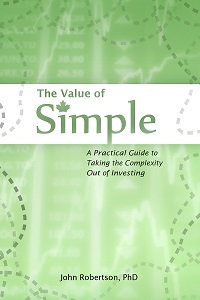
Start Investing: Ah-ha, now more into my subject matter. This is a great time of year to start investing: you may have a bunch of cash gifts, or will have some free cash flow to save once the holiday credit card bill is paid off. A new round of TFSA contribution room just opened up, and it’s still early in “RRSP season” so there won’t be much of a wait to see someone (if you need to). If you’re not quite sure how to get started, go off and do some reading (for example, my own book: Potato’s Short Guide to DIY Investing), but don’t spend too much time on that: it’s easy to get lost becoming a near-expert on theory, and planning out a perfect-to-the-last-basis-point investment plan without actually getting around to opening an account. Particularly early on, actually starting with a “good enough” plan is better than getting it perfect — especially with one that’s easy to back out of (like a savings account, or a no-load fund with a short lock-in time like TD’s e-series funds or ING Direct’s Streetwise).

Travel more: That’s not even a resolution, that’s a wish or a plan for a one-off event. Get out of here.

Be environmentally friendly: this is a good one to break up into a few pieces, and add them as you go. January is a good time to get on the energy-efficiency kick: put on a sweater, turn down the thermostat, get that shrink-wrap film for the windows, put a grill block on your car. February is a great time to kick bottled water and start using a reusable bottle (the tap water is particularly chill this time of year, too). The spring is best for avoiding car use, and mucking around with composting/gardening.

Learn more/study more: A new term for those in school, and a great time to snuggle up in bed with a good book for those who aren’t. Go ahead and tackle this one right away.

Improve the blog: Well, posting more is a common resolution, but that is not necessarily an improvement if it’s a matter of quantity over quality. Myself, I’m cleaning up the blogroll: a few sites there have stopped posting (or equivalently, been taken over by sponsored ad posts). Self-promotion time: is Blessed by the Potato in your blogroll? If you want to start a blog, then I’d recommend starting by writing a few posts to get a feel for just writing without having to deal with the whole issue of putting it all out there for the world to comment on, or dealing with a platform (it’s pretty easy these days, but still not zero work to set up a blog).

Things that are, and that are not, in your control: in general, I think it’s important to recognize what is and what is not under your control when undertaking your new year’s resolutions. It’ll be nothing but disappointment and guilt, leading to an unstoppable shame spiral if you set some kind of new year’s goal that you actually have no power to enact. For example, you may decide to be more efficient at work and make more money, but only one of those may actually be under your control.


SPF Giveaway – I Won A Prize!

January 3rd, 2012 by Potato

Just wanted to take a moment to thank Sustainable Personal Finance for the giveaway, especially since I ended up getting a prize out of the deal! Woo-hoo! And of course, the sponsor, Maximizing Money for providing the prize :)

2012 Stock Picking Contest

January 2nd, 2012 by Potato

Here are my picks for the 2012 Island of Misfit Bloggers Stock Picking Contest:

Poseidon Concepts (TSE:PSN) ($12.45)
Indigo (TSE:IDG) ($7.40)
Superior Plus (TSE:SPB) ($5.75)
Research in Motion (TSE:RIM) ($14.81)

I’ve already done a whole post on PSN.

Indigo was originally a “hidden value” play for me. Now the Kobo division has been sold (though the deal has yet to close), and yet the stock price has been languishing after an initial bump on the news — presently trading at about the value of the Kobo deal plus half tangible book of the bookstore business. Management has said that they won’t be returning the cash from Kobo to shareholders, which means some mad folly may easily destroy the value there. For risk management reasons, I won’t be buying any more in RL unless it gets a lot cheaper, but there’s a lot of potential here if Indigo can shake the impression of being somehow on death’s doorstep (a profitable holiday quarter would help a lot there).

Superior Plus is a long-time holding of mine. A bit of a strange mini-conglomerate with 3 business lines, one of which I like, one of which is mediocre but generates reasonable cash flow, and one of which is just terrible. They took on too much debt building this little conglomerate, and the debt market has recently bitten them. The past few years have not been easy for them, and they spent a long time over-paying a juicy dividend while hoping business fundamentals would turn around faster than they did. When they did finally decide to cut the dividend, the stock tanked (from already-depressed levels), yet the company is still about as cash-generating as it was a few months before; all that changed is where the cash is going. Plus, new management may lead to a promising 2012. The thing to watch will be dilution, as they state they are still looking for tuck-in acquisitions, which will be funded with equity (since the objective now is to reduce debt). That makes me roll my eyes, since expansion by acquisition is in large part what got them into trouble in the first place, and you don’t want to be doing equity raises while the stock price is so depressed.

RIM: there are stocks that are “priced for perfection” which means that so many good expectations are built in that even if the company is profitable and grows but just grows a little less than the market was hoping — anything short of perfection — the stock price can tank. At some point a few years ago, that description may have fit RIM very well; it seems to be the opposite now. RIM is if anything, priced for the worst-case scenario: barely above book value, for what is still a profitable company — though no longer a growing one, in a very rapidly shifting business. At this point though, I think any good news could really drive the stock up, as witnessed by the 10% pop on the mere rumour of a rejected takeover courtship. I don’t own any in RL, but was hoping for some last-minute tax-loss selling to put it into the $12-13 range (it sure looked like it was heading there before the rumour came out). Some big things to watch for include just falling flat on their face: the fabled QNX phones were supposed to be the next big thing for RIM, but they have been much-delayed, and now may not even make it out for the 2012 holiday season. Mr. Market’s pessimism may be overdone in this case, but it is certainly not unwarranted.

Active Investing Thoughts – 2011 Underperformance

December 31st, 2011 by Potato

I’ve been trying to write this post for a long while, and will likely end up writing several iterations, so bear with me. Basically, I’m caught on the edge of active (value) investing vs passive (index) investing.

There are a lot of good criticisms of active investing out there, which strongly suggest that even if it is possible, it is not easy to beat the market. I was hoping I’d get a chance to read the Quest for Alpha before this post, but I don’t know when I’ll find the time, and I can always change my mind in the future (which is fodder for a second post!). Anyway, one of the things that sticks with me in the active vs passive debate is that much of the evidence against active investing comes from looking at actively managed mutual funds, which fail to out-perform their indexes net of fees to a ridiculous extent. A common (and useful) trope is that mutual fund managers are professionals who eat drink and breathe the markets, so if they can’t out-perform, then what hope do you have? However, that raises the question of whether actively managed mutual funds are the same as actively managing your own portfolio, and I think that there are key differences.

So we know then from all the studies at the very least not to invest like a mutual fund. What are some of their characteristics? High turnover. Being forced to hoard cash at market bottoms to fund redemptions. Chasing performance. Short-term (yearly or even quarterly) outlook. Avoidance of portfolios that are radically different than the index (there’s no point in being a closet indexer unless you have ridiculously low costs — just index). A focus on large, liquid companies. Window-dressing with hot companies.

Another, disciplined, approach might work then. Indeed, there are some investors out there who have consistently beaten the indexes which suggests to me it is possible to do so. I’m a numbers guy and not a people person, so I figure I have a much better chance of being one of the few investors that can beat the market than finding one who’ll manage my money for me. Though I have to endorse Michael James’ view that most people will not be able to do either, so the best option may be to not even try.

Theory aside, how have I actually done as an active investor? The first two years: not bad. I was down in a down market, but less than my benchmark indexes. Then the market came raging back, and so did I — again, a little bit better than the market, but nothing really to brag about. Then in 2010 the market had a decent year, and I had a blow-out one, nearly tripling the market return, though much of that was admittedly luck. All the while I was sticking to my principles: low turnover (~3-4 year portfolio turnover) and low costs (I figured my trading costs were around 30-40 bp, very comparable to index funds — partly a function of concentration, but mostly of a lack of trading). But then 2011 came along.

I’ve made a lot of mistakes in investing this year: TRE, TEPCO, YLO being some of the worst, but I had a few moments of stubbornness and what can only be described as idiocy (one particularly bad case of anchoring). I also had some real under-performers that I don’t yet know how to classify (IDG, SPB, NFI). If you had asked me in the summer, I would have estimated my “alpha” at something like -15% this year — it was looking so bad CC quipped “is there a pooch you don’t own?”. To be sure, I made mistakes in 2009 and 2010 too, but they were offset by some real winners, so overall alpha was positive. This year the last few months helped make up for a disastrous middle, but only a bit: in the end, I was down about 9.3%, vs the Canadian e-series fund down 9.8% and the US one up 2.0%, for a benchmark of -3.9% (I have not accounted for the impact of luck in terms of withdrawals/investments – that’s my IRR vs. a straight annual total return for the index funds). That was a relative under-performance of 5.4%.

“I didn’t do it right” is not a strong defence of active investing — I need results in the real world, so if active investing leads me to make more mistakes and under-perform passive investing at the end of the day, then I should be passive investing, even if active investing “would have” done better “if only” I didn’t make such-and-such a mistake. Would have and if onlys are great for study, but lousy for results. And the hard-and-fast of it is that by attempting active investing, you open the door for more mistakes to be made.

But I also know that even successful active investing has its bad years – partly due to mistakes, partly due to trading off higher risk for more rewards, partly due to just setting up for the future (buying what’s beaten-up only to watch it continue to get beaten up for a while).

I also know that index investing has one thing that’s a little tough to stop thinking about trying to improve: how the indexes are made up. It’s an arbitrary process — one that works great, don’t get me wrong, but no less arbitrary for that. Why does S&P get to choose which companies go in the index and which don’t, rather than say, me? The Dow is a total black box, and the TSX composite is widely regarded as over-weighting some sectors and under-weighting others. Some quasi-passive funds have emerged to put a “fundamental value” tilt on a large index with a simple weighting formula, but those look like they have flaws too (e.g., taking the already poorly balanced TSX composite, and skewing it even further towards financials).

I’ve often thought about the possibility of being “passively active” (or actively passive?) — embrace the passive philosophies of low portfolio turnover, low costs, and broad diversification, but create your own index (one that could be even better weighted by sector than the TSX, for example). Simply attempt to create a representative sample of the universe of stocks. Unfortunately, just as I was drafting a post focused on that idea a month or two ago, Michael James started talking about volatility drag and how that might not work as planned. Drat.

So once again I find myself on the fence about the active-vs-passive debate. For sure, passive investing is all I recommend to beginning investors, and all I cover in my book. Most people don’t have the OCD or emotional deadness or the je ne sais quoi that makes for a decent active investor. I don’t know myself if I’m most people or not yet. But I’m not yet ready to write off active investing as nothing more than futile hubris.

Nonetheless, I have to protect myself from overconfidence, so I do have a passive indexed portfolio to complement my active one. I do track my returns and compare how I’m doing. I use Potato’s Valve to stop myself from throwing good money after bad, and to ensure that an essential core of my portfolio is following the logical passive portfolio, so that at least my minimum goals can be met even if I blow up my active portfolio through mis-management.

Anyway, a rough year for active investing in the Potato household. Lots of mistakes were made, and though I could write many posts on what they were and how to try to avoid them in the future, the simple fact is that attempting active investing makes mistakes possible. Yet I’m still on the fence, and not quite ready to go all-passive. Like Warren Buffett said, sometimes value investing just grabs you, immediately clicks, and you can’t stop thinking about buying a dollar for fifty cents.

New Year’s Day, 2012

December 31st, 2011 by Potato

I was going through my archives, trying to find out exactly when I started BbtP, since it’s been lost to the fog of memory. I know when I first got the holypotato.com domain (November 2001), and when I first got the current incarnation running on WordPress (October 2005)… but all I could remember was that I started working on something approximating the current blog format — with regular updates — sometime in early undergrad (back then, it was all done in Notepad), and that the title dated back a year or two before then (the original concept involved more humour & creative writing and fewer parentheses). Well, I’ve found the answer: Potatomas break, 1998 is my oldest site backup. So this would be my 13th anniversary (or 14th, depending on how long the site languished with just a few html files and no backups). Let’s say 13th anyway. Hurray!

Now for a little retrospective.

What a hell of a year 2011 was.

I started off by looking at some alleged stock frauds, then by the middle of the year got caught up in one myself, losing a fair bit of money. We fought UBB and won. I realized that the internet is far more interested in a 1-minute photoshop filter of a panda bear than a year’s worth of thoughtful short-form writing. Japan was rocked by an earthquake and tsunami, but it’s the nuclear accident we remember. I wrote a book, and a guide for TD e-series. I wrote a lot more about real estate than I ever thought I could fit into one year. I had my first problem with the Prius.

I got my doctorate.

2012 will likely be even bigger, as I’m going to have to find a new job. And we’re expecting our first child in the spring!!!!11one!!

So you know that of course, things are going to change around here. I’m going to have to round off and pad all the sharp corners on the theme, and all future posts are going to become exclusively about cleaning up puke, stroller reviews, and complaining about sleep deprivation. Which is fitting, seeing as how the site started as a result of (and complaining about) severe sleep deprivation.

Here’s to a great 2012, everyone!